Food ·
Exploring Germany’s Sausage Traditions
Germany’s sausage traditions are a flavorful journey through the country’s rich culinary history. You’ll discover how each region boasts its own unique sausages, shaped by local culture and ingredients.
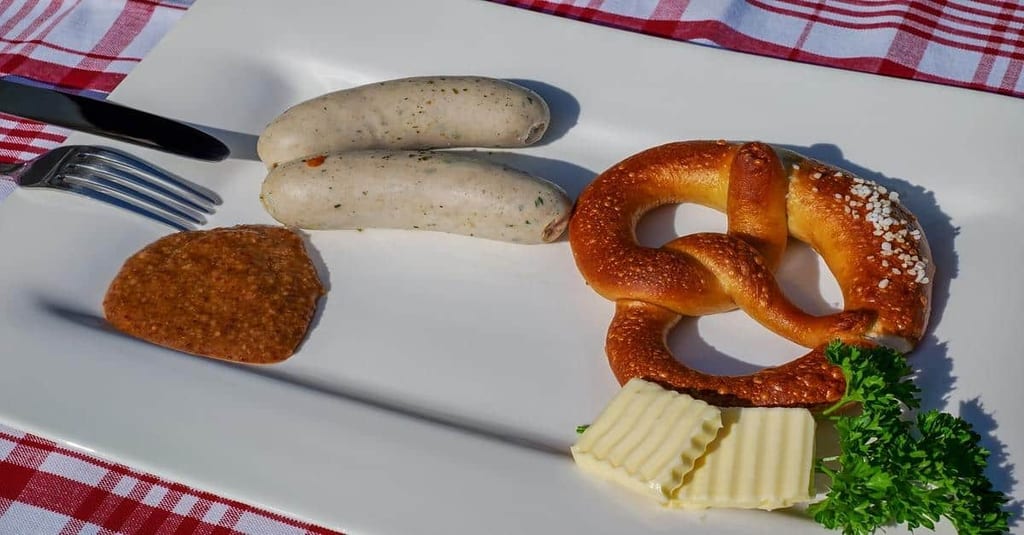
PHOTO BY COULEUR ON PIXABAY
Germany takes sausage seriously, and rightly so. Each region has developed its own varieties over centuries, shaped by local ingredients, climate, and culinary customs.
From grilled bratwurst at a street stall to poached Weisswurst at a Bavarian breakfast table, these are dishes with real character. Here are three to know.
Bratwurst
Bratwurst is Germany’s most widely known sausage, made from pork, veal, or beef—the name itself comes from Brät (finely minced meat) and Wurst (sausage). Typically grilled and served in a roll with mustard or sauerkraut, it tastes best fresh off the grill.
Regional styles vary considerably: Nuremberg bratwursts are small and flavoured with marjoram, while Thuringian ones are longer and seasoned with caraway. Each region is proud of its version.
Check out this roasted bratwurst video:
View on Instagram
Weisswurst
Weisswurst, or "white sausage," is a traditional Bavarian dish. Made from minced veal and pork belly, it's seasoned with parsley, lemon zest, and cardamom.
It's traditionally served with sweet mustard and a fresh pretzel, as shown in the following post:
View on Instagram
Weisswurst is often cooked in water, keeping it tender and juicy. To eat Weisswurst like a local, use your hands. Don’t forget to dip it in that sweet mustard!
Currywurst
Currywurst is Berlin’s most iconic street food: a grilled bratwurst sliced and served under a sauce of seasoned ketchup and curry powder. Simple, satisfying, and surprisingly addictive.
It was invented in West Berlin in 1949 and has been a city staple ever since. Regional variations exist, but the Berlin version—with or without skin—remains the benchmark.
Here’s a video of how currywurst is cooked: